Ideas of European unity are much older than the EU, and have in some way or other contributed to current attitudes towards said unity. But debate is fierce over what past contributions deserve to make it to this list, and candidates from the past are inevitably shoehorned into present-day political narratives. Such has been the case of Christianity.
A fair amount of pan-Europeans would consider Christianity fundamentally unrelated to the construction of the idea of Europe, and view it negatively in terms of human and scientific progress. This way of looking at Christianity is in part a product of present-day political battles, but it also bears historical legacies. Humanist views of the Middle Ages and the Enlightenment are chief among these.
Humanists detain a huge responsibility in demonizing Medieval times as well as in creating the myth of a perfect antiquity, monolithic and of common character. The continuity between classical antiquity and the Middle Ages is attested, and the study of history has moved well beyond the notion of dark ages, although popular culture has not.
The concept of Europe first came to light during antiquity, and its definition as separate from Asia came during the Greco-Persian Wars. However, the basic distinction adopted by Romans and Greeks was not a geographical one but one based on perception and civilization levels. Persians, Germans, Goths: it didn’t matter where they were from, they were just barbarian peoples.

The Christian view of mankind is different from that of Classical Antiquity, as it consists in the belief that all men are equal and part of a single divine plan. At first, scholars like Saint Girolamus and Agostinus pointed out that the barbarian invasions were part of this Plan; afterwards religious authors highlighted that not only barbarians were “sent by God”, but that they were no less human than the people of the Greco-Roman world, and that any discrimination against them was in contradiction with Christ’s will.
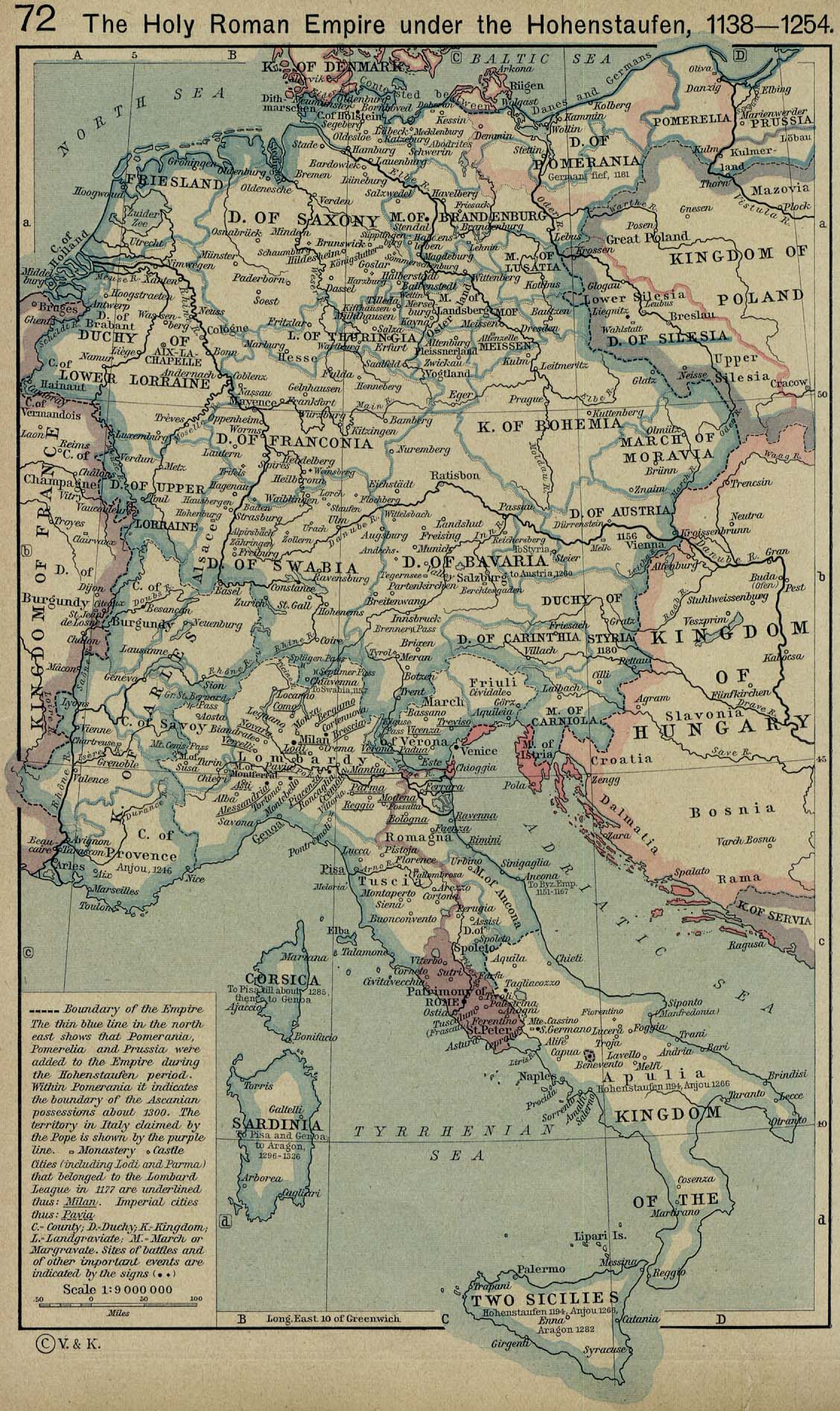
This strenghtened and justified the integration between Romanics and Germans and their respective cultures, the birth of new kingdoms which would eventually provide the foundations for European States, and the conversion of both Western and Eastern Europe. The rise of Christianity over the continent resulted in the setting up of a common mindset that enabled cultural debates to be hold on a continental basis.


Medieval Christianity might not have raised awareness of Europe as an idea at first, but it brought Europeans together in a first instance of commonality. From the Iberian peninsula to the Volga, for the first time a network of political and cultural links led people to use the word Europe in a cultural and political sense. That this was perceived as such is evident by the fact that among the oldest ideas of pan-Europeanism, one finds a wealth of examples centered upon Christendom. Emeric Crucé, Tommaso Campanella and the Duke of Sully are but a few of the intellectuals and utopian thinkers who proposed or endorsed a European federation of Christian kingdoms as a guarantor of peace.
European history has moved well past this point, and has outgrown its own religious inception, for which we can only be grateful; but Christian thought and culture, if not necessarily its theology, remains a part of European identity to this day, and is to be credited with its inception.